High-Yield Savings vs Money Market Account: Which Wins in 2026?
Both are insured and both pay real rates. The choice comes down to whether you need to spend directly from the balance.

In this guide 7 sections
Quick answer: A high-yield savings account and a money market account both pay competitive rates on insured deposits. The money market account usually adds check-writing and a debit card, sometimes with a higher minimum balance. For most savers the high-yield savings account wins on rate and simplicity; the money market account wins when you need direct spending access.
These two accounts get lumped together for a reason. They hold cash, they pay interest, and they both carry federal deposit insurance. The differences come down to access and minimums, not safety.
This comparison covers how a high-yield savings vs money market account decision actually plays out — rates, withdrawal rules, minimum balances, and the worked math on a $10,000 balance — for anyone deciding where to park short-term cash in 2026.
High-yield savings vs money market account, side by side
The table below lays out the practical differences. Read it as typical terms, not universal ones, since individual banks vary.

| Feature | High-yield savings | Money market account |
|---|---|---|
| Typical rate | Usually the higher of the two | Competitive, often slightly lower |
| Minimum to open | Often $0 to $100 | Commonly $1,000 to $25,000 |
| Check writing | No | Usually yes |
| Debit card | Rarely | Often |
| Federal insurance | Yes, to $250,000 | Yes, to $250,000 |
| Best use | Emergency fund, savings goals | Cash you may spend directly |
One correction worth making up front. A money market account is a deposit account at a bank or credit union. A money market fund is an investment product at a brokerage, and it is not deposit-insured. The two get confused constantly, and the difference matters the week a fund's share price slips below a dollar.
How much more does a high-yield account really pay?
Enough to matter on a four-figure balance, and not enough to matter on a few hundred dollars. The spread between a high-yield savings account and a money market account at the same institution typically runs a fraction of a percentage point, while the spread between either one and a traditional savings account runs several points.

That second gap is the one worth chasing. The Federal Deposit Insurance Corporation (FDIC) national rate data has shown the average savings account paying well under 0.50%, while online accounts have paid multiples of that. Here is the arithmetic on $10,000 held for a year:
| Account | Rate | Interest on $10,000 | Versus national average |
|---|---|---|---|
| Traditional savings | 0.40% | $40 | — |
| Money market | 3.75% | $375 | +$335 |
| High-yield savings | 4.00% | $400 | +$360 |
Those rates are illustrative, not quotes. The point stands regardless of the exact numbers: moving from a traditional account to either high-yield option is worth roughly $335 a year on $10,000, and choosing between the two is worth about $25. In our rate tracking at Coinpurse, the bank you choose matters far more than the account type you choose.
Both rates are variable. A promotional APY can drop the month after you fund the account, which is why we tell readers to check the rate quarterly rather than set it and forget it for three years.
Compounding frequency is a smaller factor than most comparison pages suggest. Daily compounding at 4.00% produces an effective yield a few cents above monthly compounding on $10,000. Compare the posted annual percentage yield, since APY already folds compounding in, and ignore the marketing copy about how often interest credits.
Watch the tiers instead. Some money market accounts pay their headline rate only above a threshold — say $25,000 — and drop to a fraction of it below that. A "3.75% money market account" holding $8,000 can quietly pay 0.90%. The tier table sits in the account disclosure, usually two clicks past the rate you saw advertised.
What are the withdrawal rules on each account?
You can take money out of either account any time, but the paths differ. A money market account lets you write a check or swipe a debit card directly. A high-yield savings account almost always requires a transfer to checking first, which clears in one to three business days at most institutions.
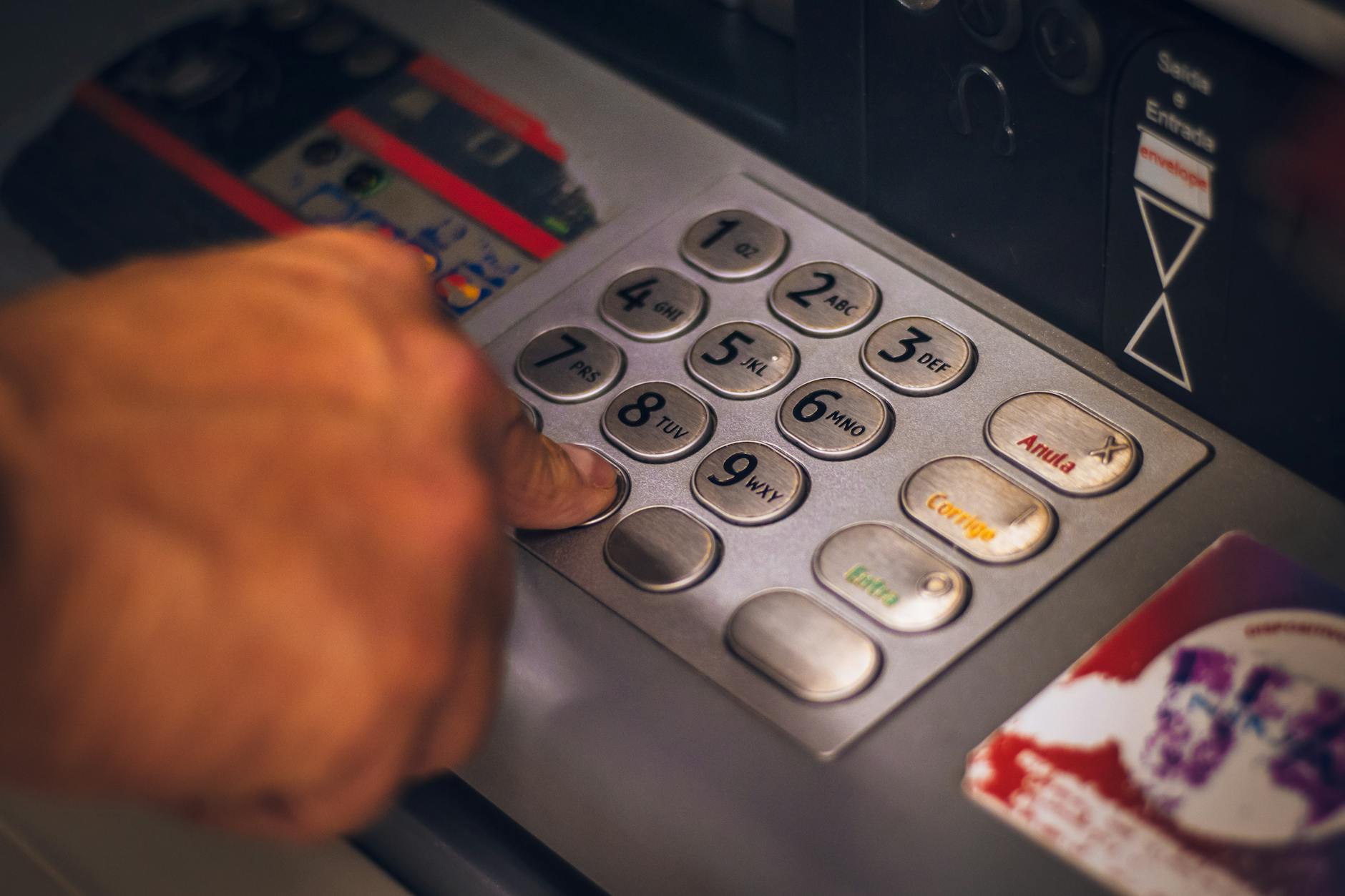
The old six-per-month withdrawal cap is worth understanding. The Federal Reserve's Regulation D compliance guide historically limited certain transfers from savings and money market accounts to six per month. The Federal Reserve removed that limit in 2020, but banks were allowed to keep enforcing it, and many still do. Check your own bank's fee schedule instead of assuming the cap is gone.
That access difference drives the real decision. If the cash is a cushion you hope not to touch, the extra friction of a savings account is a feature. That logic is the same one behind our step-by-step plan for building an emergency fund from scratch: money that is slightly harder to reach gets spent less often.
Insurance and taxes work the same way on both

Deposit insurance is identical. The FDIC covers up to $250,000 per depositor, per insured bank, per ownership category, and the National Credit Union Administration (NCUA) share insurance program provides matching coverage at credit unions. A money market account at an insured bank is exactly as protected as a savings account there.
Ownership category is the part people miss. A single-owner account and a joint account at the same bank are insured separately, so a married couple can hold well above $250,000 at one institution and stay fully covered. That only matters at the top end, but it is worth knowing before you split deposits across three banks for no reason.
Taxes are identical too. Interest from either account is taxable as ordinary income at your federal rate, and the bank reports it on Form 1099-INT once you earn $10 or more in a year. The Internal Revenue Service (IRS) guidance on interest income spells out the reporting threshold and which interest is exempt.
Worth knowing: earning $400 of interest in the 22% federal bracket leaves you about $312 after tax. Compare after-tax returns when a rate difference looks close.
Does It Matter If the Account Is at an Online-Only Bank?
It matters for rate and for access, in opposite directions. Online-only banks consistently post the highest high-yield savings and money market rates, since they skip branch overhead and pass more of that savings on as yield. Most of the top rates in any given month belong to an online-only institution, not a household-name bank with branches.
The tradeoff is cash access. An online bank has no branch to deposit a check in person or get a cashier's check same-day, and moving money in or out means an electronic transfer that typically takes one to three business days to clear. A brick-and-mortar bank trades a lower rate for same-day teller access and in-person help resolving an account issue.
Our practical suggestion at Coinpurse: keep a small checking cushion at a brick-and-mortar or well-known online bank for everyday spending and same-day needs, and let the online-only high-yield account hold the bulk of savings you're not touching this week. That split gets you the better rate on the bulk of the money without giving up quick access to what you actually need day to day, whichever bank ends up holding it.
Which account should you actually open?
Pick the high-yield savings account if the money is an emergency fund, a down payment, or any goal you are not spending from this month. You get the better rate, a lower minimum, and useful friction between you and the balance.
Pick the money market account if you want the same kind of rate on cash you may spend directly — a contractor deposit, a tax payment you are holding, or a self-employed income buffer you pay bills from. The check-writing access is the entire reason to accept a slightly lower rate and a higher minimum.
A split works too, and at Coinpurse we see it often among self-employed readers: the emergency fund in high-yield savings, the quarterly tax reserve in a money market account they can write a check from.
The bottom line
High-yield savings and money market accounts are close cousins, not opposites. Both are insured, both pay real rates, and the choice between them comes down to whether you need to spend directly from the balance. Rate shopping across banks will earn you far more than agonizing over which of the two labels to pick.
Your next step: pull up your current savings rate, compare it against the FDIC national average, and move the money if the gap is more than two percentage points.
By Tom Reyes, Contributing Writer at Coinpurse. Fact-checked as of September 2026.
Coinpurse covers personal finance — saving, credit, banking, and budgeting — for people managing real money on an ordinary paycheck.